

Quick answer
The Blue Cave is at Balun Cove, Biševo Island, 21485, Croatia — a small island southwest of Vis in the central Adriatic, roughly five hours' sailing from Dubrovnik and far closer to Split. There is no road access; every visit arrives by boat. The site operates 08:00–18:00 daily, and a 24 EUR conservation fee applies per person.
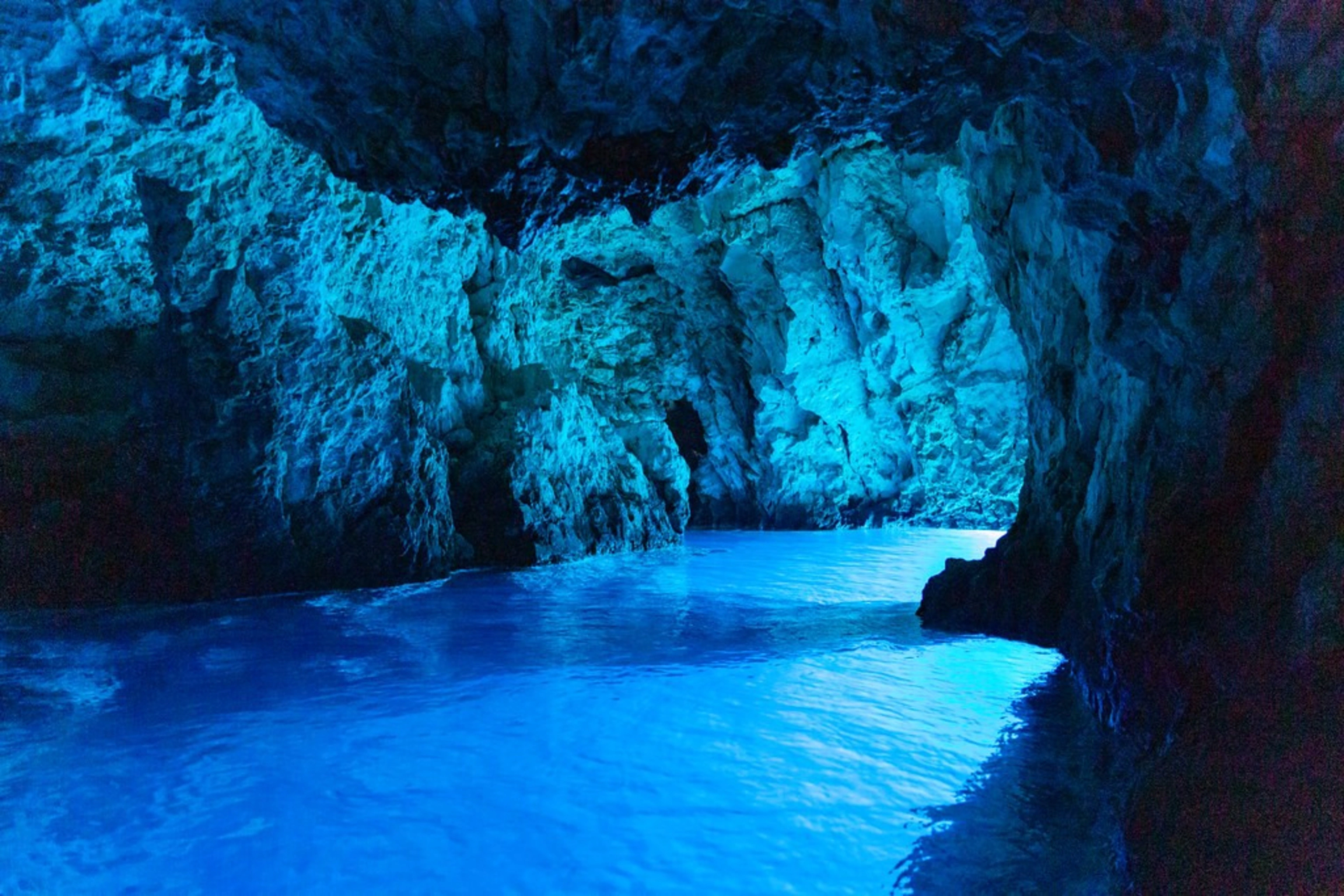
Modra špilja was not discovered by a Croatian at all. Baron Eugen von Ransonnet-Villez, an Austrian painter and naturalist, published an account of it in 1884 and pushed for an artificial entrance to be blasted into the rock so small boats could enter without swimming. That opening, cut in 1884, is the one visitors still pass through today. The natural underwater aperture beneath it is what does the real work: sunlight enters the sea outside, refracts through that submerged gap, and reflects off the pale limestone floor, turning the water inside an intense cobalt. Ask where is the blue cave in croatia and the honest answer involves geography most itineraries do not anticipate — this is not a coastal attraction you drive to. Biševo is a farming island of fewer than twenty permanent residents, sitting five nautical miles southwest of Vis, which itself lies further offshore than any other inhabited Croatian island. That double remove is the single fact that reshapes a visit. Vis was a closed Yugoslav military base until 1989, which spared it the development that reached Hvar and Korčula, and left Biševo quieter still. Reaching Balun Cove means a boat to Vis or a direct excursion vessel, then a transfer into a small licensed craft at the cave mouth, because the 1884 entrance admits only low, narrow boats carrying a handful of passengers at a time. Numbers inside are managed by the Vis Archipelago Geopark, which oversees the site as protected marine heritage. On days when the maestral wind builds through the afternoon, the swell at the entrance can close the cave outright — a possibility no schedule can eliminate. For travellers starting on the southern Dalmatian coast, the distance is the planning problem. A blue cave tour from Dubrovnik is a long single-day commitment across open water, and most operators combine it with Hvar, the Pakleni islands, or Stiniva beach to justify the crossing. Anyone treating this as a casual half-day among Dalmatian landmarks will misjudge it. The practical alternatives are staging from Split, Hvar, or Vis town, all of which shorten the sea leg substantially. Reading a where is the blue cave in croatia guide with a chart open is worth the ten minutes; the Adriatic distances involved are easy to underestimate on a phone map, and ferry timetables to Vis thin out sharply outside the summer months. What to do with all this is straightforward. Fix the departure port first, because that decision determines the length of the day more than anything else. Confirm the crossing operates before booking accommodation around it, since Biševo excursions are weather-dependent by nature and cancellations are reissued rather than argued over. Bring the conservation fee in cash — the island has no card infrastructure at the cave — and expect the visit inside to last minutes rather than hours, which is normal and not a shortfall. Sailings, sea conditions, and cave access are covered in detail on the booking pages, where live availability for the relevant departure ports is kept current.
“Biševo is a farming island of fewer than twenty permanent residents, and that double remove from the mainland is the single fact that reshapes a visit.”
Exactly Where Is the Blue Cave in Croatia: Accessing Biševo Island
The Blue Cave is located at Balun Cove on Biševo Island, Croatia. Because the island is small and lacks public infrastructure, the only way to reach the cave is by boat from nearby hubs, primarily the port of Komiža on Vis Island.
Ferry from Split to Vis Town
Speedboat transfer from Vis (Komiža) to Biševo
Direct excursion boat from Dubrovnik
When Is the Best Time of Day to Visit the Blue Cave in Croatia
The best arrival window is 11:00–13:00, as this period provides the optimal angle of sunlight for the light refraction that creates the blue glow effect within the cave. Planning your visit within this timeframe is essential to observe the phenomenon as intended.
Peak Season (July-August)
Very heavy crowdsHot, 28–32°C
Expect longer queue times and high humidity during these summer months.
Shoulder Season (May-June, Sept-Oct)
Moderate crowdsMild, 20–25°C
This period offers a balance between favorable weather and more manageable visitor numbers.
Weekday mornings
Lower visitor volume—
Choosing a weekday before the midday surge can reduce wait times while still aligning with the ideal sun angle.
Verdict: The best period for a visit is during the shoulder months of May or September, arriving at the cave between 11:00 and 13:00.
Operating Hours for Where the Blue Cave in Croatia Is Located
The Blue Cave is open daily to visitors throughout the week. These operating hours provide a framework for planning your transit from nearby coastal departure points.
| Monday | 08:00–18:00 | |
|---|---|---|
| Tuesday | 08:00–18:00 | |
| Wednesday | 08:00–18:00 | |
| Thursday | 08:00–18:00 | |
| Friday | 08:00–18:00 | |
| Saturday | 08:00–18:00 | |
| Sunday | 08:00–18:00 |
Common Mistakes to Avoid When Visiting the Blue Cave in Croatia
Most failed visits to the Blue Cave come down to preparation, not bad luck. These are the errors that turn a planned trip into a wasted day on Biševo.
Arriving with only a card and no cash
The conservation fee at Balun Cove is collected in cash, per person. Withdraw euros on the mainland before boarding, as there is no ATM on Biševo.
Turning up outside the peak light window
Aim to be at the cave entrance between 11:00 and 13:00. Outside that window the light angle drops and the blue glow weakens considerably.
Ignoring the wind and swell forecast
Entry is by small boat through a low opening, and moderate swell closes it without warning. Check the marine forecast the evening before and again on the morning of your visit.
Treating the trip as a short excursion
Allow a full day. Crossing from the mainland, queuing for transfer boats at the entrance, and returning takes far longer than the few minutes spent inside.
Failing to confirm the cave is open that day
Closures are decided locally on the day based on sea conditions. Confirm with your operator before travelling to the harbour rather than assuming the schedule holds.
Skipping a backup plan when access is refused
Have a second island stop in mind. Boats are rarely turned back for the day, and nearby Vis and Biševo have alternatives worth the detour.
Check availability
Frequently Asked Questions: Where Is the Blue Cave in Croatia
Everything you need to know about where is the blue cave in croatia